
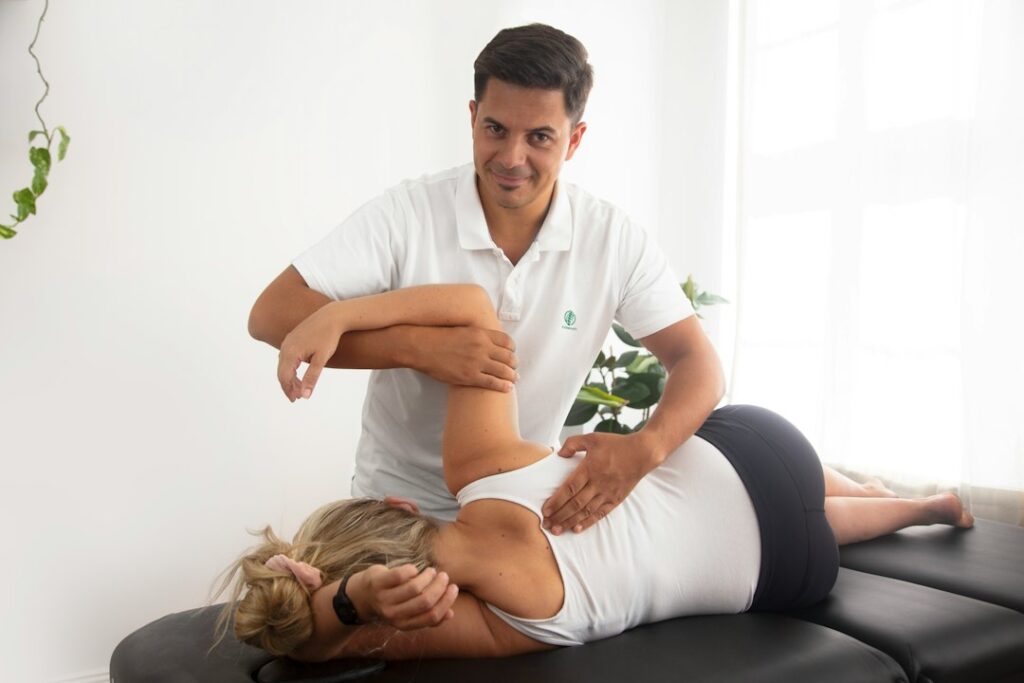
Are chiropractic care and physical therapy the same?
No. Chiropractic care and physical therapy can overlap, but they generally emphasize different parts of musculoskeletal care.
Chiropractic care often focuses on the spine, joints, movement-related pain, and hands-on techniques such as spinal manipulation or mobilization. Physical therapy focuses more broadly on restoring movement, strength, balance, coordination, and function through examination, exercise, education, and selected hands-on methods.
Neither approach is automatically better for every condition. The most appropriate option depends on the cause of the problem, the person’s health history, goals, and response to treatment.
What does chiropractic care typically involve?
Chiropractic care may include a physical examination, movement assessment, discussion of symptoms, and treatment directed at the spine or other joints. Techniques may include:
- Spinal manipulation, which uses a controlled thrust to move a joint
- Spinal mobilization, which uses gentler movement within a joint’s normal range
- Soft-tissue techniques
- Advice about posture, activity, lifting, and daily movement
- Exercises intended to support mobility or strength
For some adults with acute or chronic low-back pain, spinal manipulation may provide modest short-term improvements in pain and function. It is one of several non-drug treatment options, rather than a universal solution.
A careful evaluation matters because pain that feels like a joint or muscle problem can sometimes be related to nerve irritation, fracture, infection, inflammatory disease, or another condition requiring medical assessment.
What does physical therapy typically involve?
Physical therapy is designed to improve a person’s ability to move and function. A physical therapist may evaluate joint mobility, muscle strength, balance, walking, coordination, work demands, and the way symptoms affect everyday activities.
Treatment may include:
- Progressive strengthening exercises
- Flexibility and mobility work
- Balance and coordination training
- Walking or movement retraining
- Manual therapy
- Education about pacing, posture, and body mechanics
- A home exercise program
Physical therapy can be useful after an injury, surgery, prolonged inactivity, or a period of recurring pain. It may also help people manage arthritis, weakness, balance problems, work-related strain, and movement limitations associated with chronic conditions.
The exercise component is often central. The goal is not merely to make a person feel better during a treatment session, but to improve the capacity needed for walking, lifting, climbing stairs, working, sleeping, recreation, and household tasks.
How can the two approaches complement each other?
Chiropractic care and physical therapy may address different parts of the same problem. Hands-on treatment may temporarily reduce discomfort or improve movement, while exercise helps build lasting strength, confidence, and tolerance for activity.
For example, a person with low-back stiffness may benefit from treatment that makes movement easier at first. A physical therapy program might then address hip strength, trunk endurance, lifting mechanics, and gradual return to normal activity.
This does not mean every person needs both types of care. Combining treatments should have a clear purpose, with attention to progress rather than simply adding more appointments or techniques.
Useful questions include:
- What is the likely source of the symptoms?
- What specific function should improve?
- How will progress be measured?
- What can be done safely at home?
- What should happen if symptoms worsen?
- How long should improvement reasonably take?
Clear communication is especially helpful when more than one provider is involved. Each provider should know about current symptoms, diagnoses, medications, recent injuries, imaging, and other treatments.
Which is better for back or neck pain?
There is no single answer. For common mechanical low-back pain, both chiropractic care and physical therapy may be considered, depending on the findings and the person’s preferences.
Chiropractic treatment may be more appealing to someone seeking a hands-on approach to joint or spinal discomfort. Physical therapy may be a better fit for someone whose main needs involve weakness, reduced endurance, balance problems, movement retraining, or recovery after surgery.
Neck treatment requires particular care. Mild soreness, stiffness, or headache can occur after spinal manipulation, and serious complications are rare but possible. Neck manipulation may not be appropriate for everyone, particularly when health conditions or symptoms increase risk. A thorough health history and informed discussion should come before treatment.
Pain relief alone is not the only measure of success. Improvements in walking, sleep, lifting, work tolerance, recreation, and independence may be more meaningful than a short-term change in pain intensity.

What should Tonawanda residents consider during seasonal activities?
Seasonal routines can affect the muscles and joints. Winter snow and ice may lead to slips, sudden twisting, or falls. Shoveling can place repeated stress on the lower back and shoulders, particularly when the snow is heavy or the person is not accustomed to the activity.
Other residents may notice symptoms after long periods indoors, reduced walking, extended driving, or a sudden return to outdoor work in spring. The issue is often not one specific movement, but a rapid increase in activity beyond what the body has recently practiced.
Helpful strategies include:
- Increase activity gradually after a sedentary period
- Use short breaks during repetitive work
- Alternate sides when possible
- Keep loads close to the body
- Avoid twisting while carrying
- Choose supportive footwear for slippery conditions
- Stop and reassess when pain becomes sharp, spreading, or associated with weakness
A gradual return to activity is usually more practical than waiting for perfect comfort before moving at all. Adults are generally encouraged to include regular aerobic activity and muscle-strengthening activity, adjusted for ability and medical conditions.
Can either treatment replace medical care?
No. Chiropractic care and physical therapy are not substitutes for emergency care, diagnosis of every medical condition, or treatment of problems outside their scope.
Urgent medical evaluation is appropriate for symptoms such as:
- Sudden inability to walk or move normally
- New loss of feeling or severe weakness
- Loss of bladder or bowel control
- Severe pain after a significant fall or collision
- Fever with severe back or neck pain
- Unexplained weight loss with persistent pain
- Chest pain, difficulty breathing, fainting, or sudden neurological symptoms
A person with a known condition such as osteoporosis, cancer, inflammatory disease, blood-clotting problems, or a serious neurological disorder should share that information before beginning hands-on treatment or exercise.
How can someone choose between the two?
Start with the main limitation. If the concern is primarily joint stiffness or a desire for hands-on care, chiropractic assessment may be reasonable. If the concern is weakness, balance, reduced function, recovery after surgery, or difficulty returning to activities, physical therapy may be more directly aligned with the goal.
The quality of the evaluation matters more than the label of the treatment. A sound plan should explain the likely problem, expected benefits, possible risks, alternatives, home strategies, and signs that the plan needs to change.
The relationship between chiropractic and physical therapy is best understood as complementary rather than competitive. Both can play a role in musculoskeletal care when treatment is based on a careful assessment, realistic goals, safe progression, and attention to the person’s overall health.
